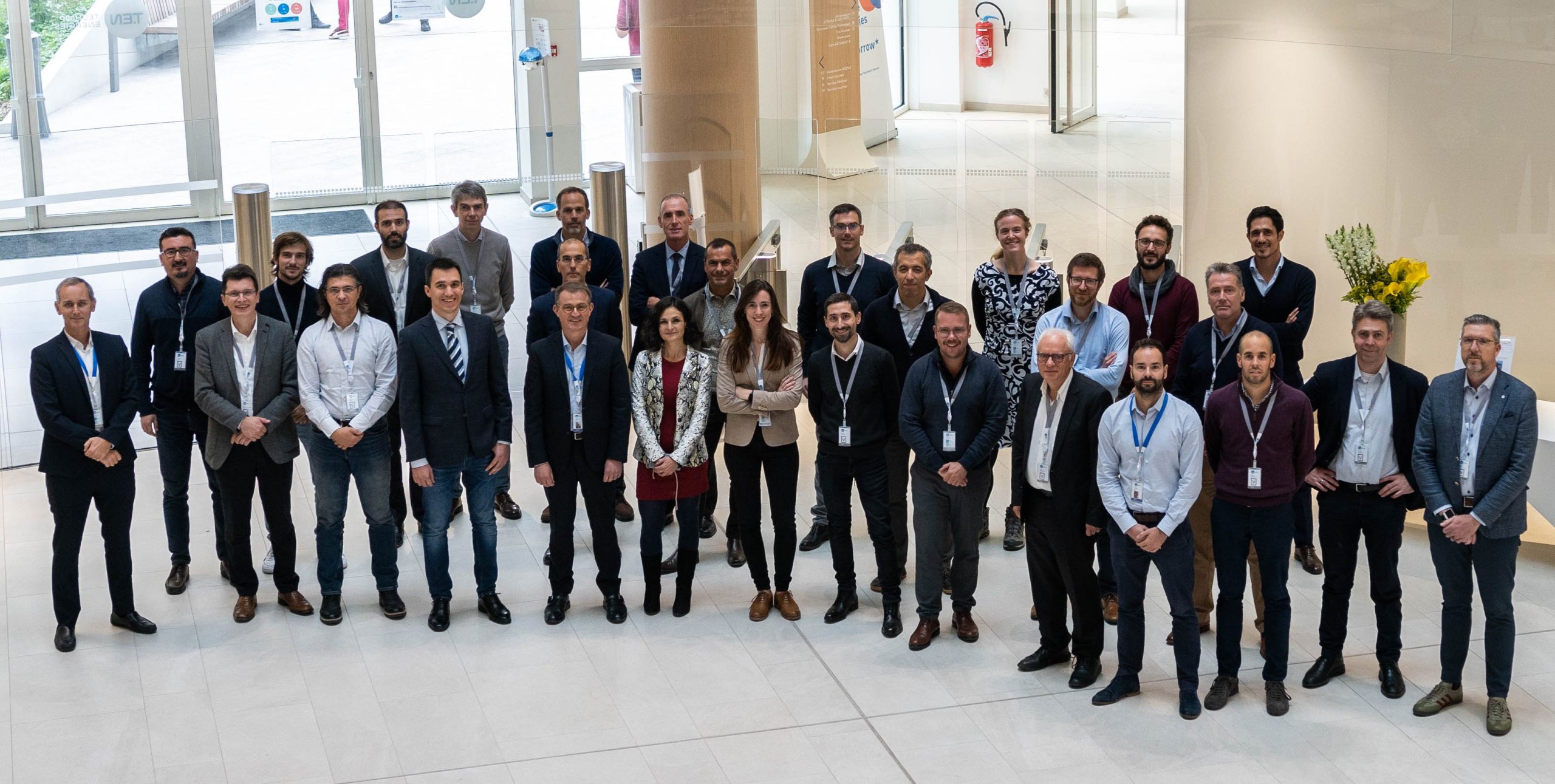
The NextFloat Project was officially launched in Paris on November 2022. It is being developed by a consortium of thirteen partners from eight countries, including Technip Energies as the Project coordinator, X1 Wind, Naturgy, 2B Energy, Hellenic Cables, Technical University of Denmark, Hydro, Ecole Centrale de Nantes, Schwartz Hautmont, Ocas, Tersan Shipyard, Ocean Ecostructures, and Cybernetix. The Project is backed by the European Commission under the Horizon Europe program with public funding of 16M€, plus private funding from partners and shareholders.
NextFloat’s objective is to demonstrate at a full-scale the innovative floating platform design, while advancing in parallel on the industrialization and scaling-up of the integrated solution up to 20MW+ scale, in preparation for commercial floating wind farms under development in Europe and other continents. The industrialization roadmap will serve as input to optimize the design for industrial mass production and deployment, required to contribute to the European and worldwide decarbonization targets.
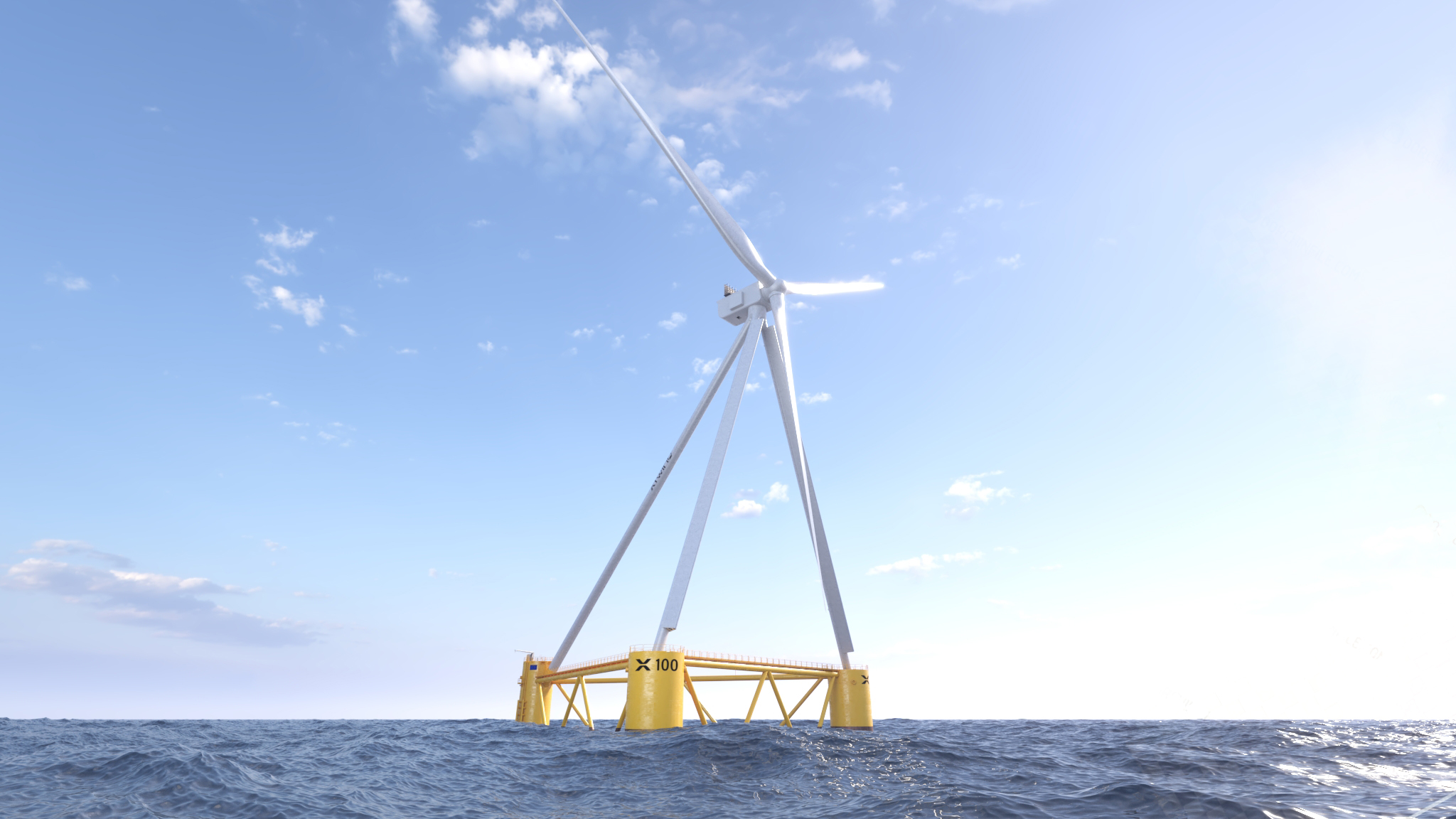
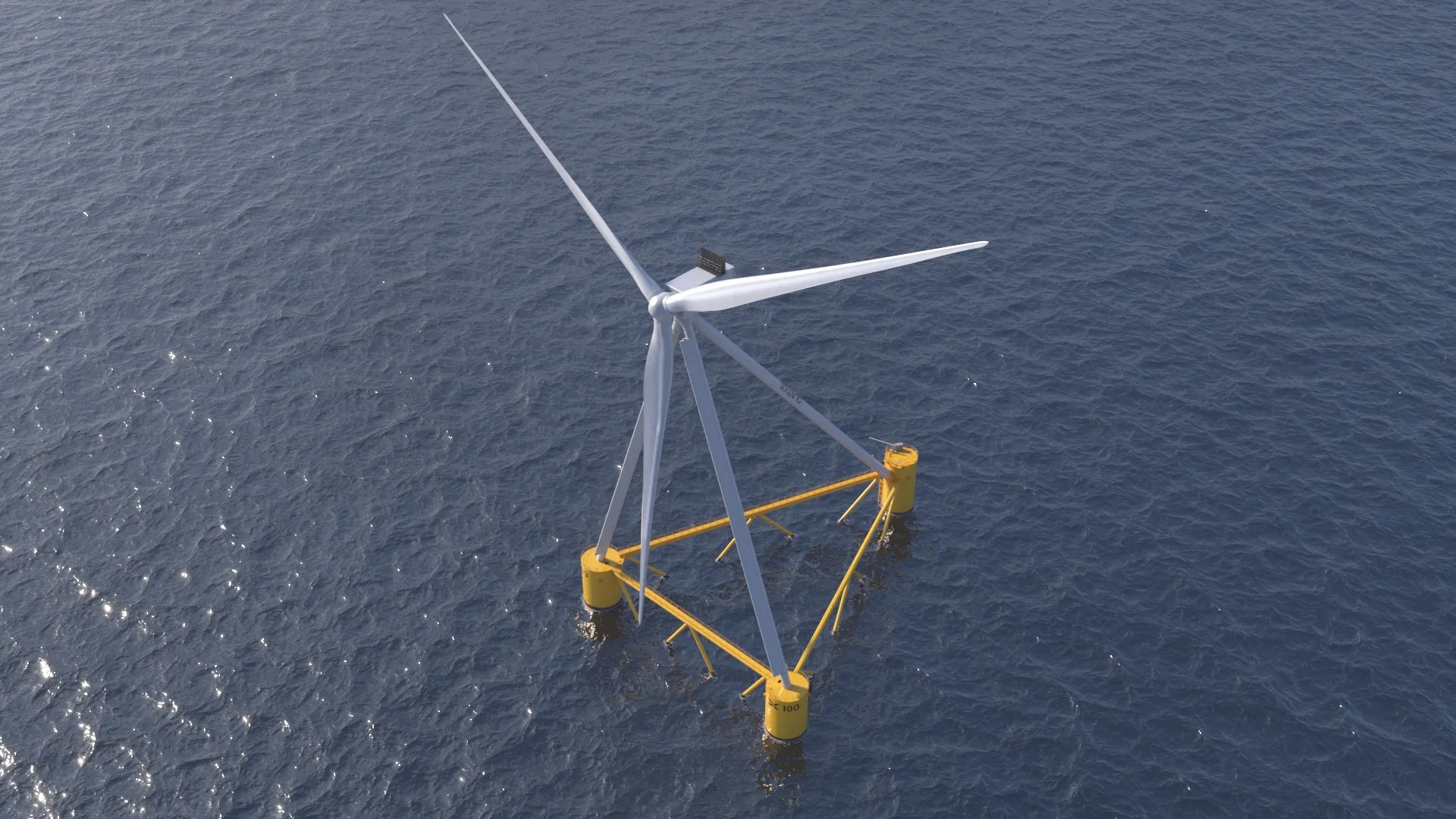
This Project builds upon the proven PivotBuoy Project prototype and count with the support of the X1 ACCELERATOR Project, whcih represents a step forward towards the scalability of the technology. The pre-commercial prototype, called “X100”, will be deployed at the PLEMCAT test site in the Spanish Mediterranean Sea.
The X100 platform is designed for turbines of around 160m diameter (X100 stands for the hub height of 100m), with power ratings ranging from 6MW to up to 10MW depending on the specific site conditions. The pilot will operate in offshore conditions for several years, providing essential data to support final prototype certification and enable commercial-scale deployment and full-scale commercialization. X1 Wind’s technology combines the stability and low environmental impact of a Tension-Leg Platform (TLP) with the cost-efficiency of semi-submersible structures. This allows for a primary steel platform weight of approximately 1,500 tons, representing an estimated weight saving of 30% to 50% compared to traditional steel floaters installed in European pre-commercial projects of a similar scale.
The Project introduces additional innovations to reduce the LCOE of floating wind and its environmental impact, namely the very small footprint on the ocean bed and the installation of a bio-boosting system applied on the floater.
After undergoing rigorous assessments, including an in-depth risk assessment and other comprehensive studies, the X100 pre-commercial floating wind platform has been granted the Statement of Compliance (SoC) for Basic Design from world-leading independent expert DNV by April 2026.
Achieving Basic Design Certification is a pivotal step in X1 Wind’s roadmap. It confirms that the platform’s structural design, stability, and hydrodynamic behaviour—including its response to 500-years extreme waves, wind, and currents—are within safe and predictable limits. Under the scope of Basic Design Approval, DNV has verified the calculation methodologies used by X1 Wind, and the design of the platform, including the station-keeping system, the weathervaning structure, and the turbine integration of the X100 platform for a service life of 25 years.
Crucially, this approval significantly accelerates the certification process for X1 Wind’s commercial-scale units. The company already has contracts in place for the scaled-up X150 version, suitable for 15-20MW turbines for major projects in Europe and Asia, using the same approved calculation methodologies established within the X100 certification.
The platform concept has previously undergone successful testing at a 1:3 scale at the PLOCAN test site in the Canary Islands through the PivotBuoy Project. Nonetheless, this pivotal step in certifying commercial-size units played a crucial role in revalidating the design.